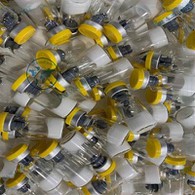


HGH 10IU FOR CHEMICAL USE ONLY

HGH Description
HGH 10IU is a human growth hormone that comes in a 10IU vial. This peptide is designed to be injected, and can help athletes enhance their performance in many ways. Some of the benefits athletes will notice are increased lean muscle mass, higher levels of fat-burning, strengthened bones, improved immune system, increased oxygen levels in the bloodstream, and increased overall performance when exercising while also having anti-aging properties. Buy HGH 10IU in our online store. It's for sale at a good price, and can be shipped anywhere in the US by mail.
The product contains synthetic somatropin, which is made up of 191-amino acids which mimic the same growth hormones that the body produces naturally. It is recommended that athletes take between 2IU-4IU daily to be injected subcutaneously, usually around the stomach area. Users will generally want to take this peptide for a minimum cycle of 8 weeks to achieve results, with many taking it in cycles of up to 4-6 months at a time. It is common to stack this with other steroids to get the best possible results in your cycle.
Even though HGH is not an anabolic steroid, it still may have some side effects when using this performance enhancer. Due to the way that HGH reacts with estrogen, gynecomastia is still a potential side effect for users. Joint pain, numbness in the hands and feet, hyperthyroidism, and diabetes are all possible side effects if the drug is not taken in proper doses.
Excretion
The mean clearance subcutaneously administered Somatotropin in healthy adults was 0.23 (± 0.04) L/hrkg. The mean terminal half-life of Somatotropin after a single subcutaneous injection in healthy adults is 2.4 hours
INDICATIONS AND USAGE
HGH is indicated for:
•Long-term treatment of pediatric patients who have growth failure due to an inadequate secretion of endogenous growth hormone.
•Long-term replacement therapy in adults with growth hormone deficiency (GHD) of either childhood- or adult- onset etiology. GHD should be confirmed by an appropriate growth hormone stimulation test.
DOSAGE AND ADMINISTRATION
The dosage of HGH must be adjusted for the individual patient. The weekly dose should be divided into daily subcutaneous injections (administered preferably in the evening). HGH may be given in the thigh, buttocks, or abdomen; the site of SC injections should be rotated daily to help prevent lipoatrophy. Pediatric GHD Patients: Generally, a dose of 0.16 to 0.24 mg/kg body weight/week is recommended. Adult GHD Patients: The recommended dosage at the start of therapy is not more than 0.04 mg/kg/week. The dose may be increased at 4- to 8-week intervals according to individual patient requirements to a maximum of 0.08 mg/kg/week, depending upon patient tolerance of treatment. Clinical response, side effects, and determination of age-adjusted serum IGF-I may be used as guidance in dose titration. This approach will tend to result in weight-adjusted doses that are larger for women compared with men and smaller for older and obese patients.
CONTRAINDICATIONS:
HGH should not be used when there is any evidence of neoplastic activity. Intracranial lesions must be inactive and antitumor therapy complete prior to the institution of therapy. HGH should be discontinued if there is evidence of tumor growth.
WARNINGS:
The HGH 3.33 mg presentation contains benzyl alcohol as a preservative. It should not be used in newborns increased mortality in patients with acute critical illnesses in intensive care units due to complications following open heart or abdominal surgery, multiple accidental traumas, or with acute respiratory failure. The safety of continuing growth hormone treatment in patients receiving replacement doses for approved indications who concurrently develop these illnesses has not been established. Therefore, the potential benefit of treatment continuation with growth hormone in patients having acute critical illnesses should be weighed against the potential risk.
DRUG INTERACTIONS:
Concomitant glucocorticoid treatment may inhibit the growth-promoting effect of growth hormone. Pediatric GHD patients with coexisting ACTH deficiency should have their glucocorticoid replacement dose carefully adjusted to avoid an inhibitory effect on growth. Limited published data indicate that growth hormone treatment increases cytochrome P450 (CP450) mediated antipyrine clearance in man. These data suggest that growth hormone administration may alter the clearance of compounds known to be metabolized by CP450 liver enzymes (e.g. corticosteroids, sex steroids, anticonvulsants, cyclosporine). Careful monitoring is advisable when growth hormone is administered in combination with other drugs known to be metabolized by CP450 liver enzymes.
ADVERSE REACTIONS
As with all protein drugs, a small number of patients may develop antibodies to the protein. Growth hormone antibody with binding capacity lower than 2 mg/L has not been associated with growth attenuation. In some cases when binding capacity is > 2mg/L, interference with growth response has been observed. In clinical trials with somatropin in GHD adults, the majority of the adverse events consisted of mild to moderate symptoms of fluid retention, including peripheral swelling, arthralgia, pain and stiffness of the extremities, peripheral edema, myalgia, paresthesia, and hypoesthesia. These events were reported early during therapy, and tended to be transient and/or responsive to dosage reduction. The following events were observed in patientsusing somatropins. Short-term local injection site reactions, suchas pain, numbness, redness and swelling. The subcutaneous administration of growth hormone at the same injection site over a long period may result in local lipoatrophy. Disturbances in fluid balance (swelling), joint pain, muscle pain, stiffness of the hands and feet, numbness. In general, these undesirable effects occur at the beginning of therapy with growth hormones and also depend on the dose. They are common in adult patients, but uncommon in children. Carpal tunnel syndrome in adults. Benign intracranial hypertension, diabetes mellitus. Leukemia has been reported in small number of pediatric patients who have been treated with growth hormone, including growth hormone of pituitary origin and recombinant GH. The relationship, if any, between leukemia and growth hormone therapy is uncertain.
Hot Tags: hgh 10iu, China hgh 10iu manufacturers, suppliers, factory, Fluoxymesterone, Raloxifene, Minoxidil, Nolvadex, Methenolone, Drostanolone