




Levamisole Hydrochloride Basic Information
Product Name: Levamisole hydrochloride
CAS: 16595-80-5
MF: C11H13ClN2S
MW: 240.75
Melting point: 266-267 °C(lit.)
Solubility: Freely soluble in water, soluble in ethanol (96 per cent), slightly soluble in methylene chloride.
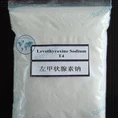
Appearance: White to almost white Crystalline Powder

Levamisole hydrochloride is suitable as an inhibitor of various mammalian alkaline phosphatases.
- Intestinal alkaline phsophatases are only slightly inhibited
- Biological response modifier with anthelmintic activity
- Stereospecific inhibitor of succinic dehydrogenase.
Shows both immunostimulant and immunosuppressant effects, depending on several controllable factors. Very effective in treatment of ascariasis (hookworm infestation). Useful in chemotherapy of colorectal cancers, possibly due to its stimulation of IL-1 production and direct activation of macrophages.
Levamisole Description
Levamisole is a synthetic imidazothiazole derivative that has been widely used in treatment of worm infestations in both humans and animals. As an anthelmintic, it probably works by targeting the nematode nicotinergic acetylcholine receptor. As an immunomodulator, it appears that Levamisole is an immunostimulant which has been shown to increase NK cells and activated T-cells in patients receiving this adjuvantly along with 5FU for Stage III colon cancer.
Levamisole acts as an antiparasitic, immunomodulator and adjuvant in colorectal cancer. Levamisole restores depressed immune function through stimulating antibody formation and enhance T-cell response by stimulating T-cell activation and proliferation.
Mechanism of action
The mechanism of action of levamisole as an antiparasitic agent appears to be tied to its agnositic activity towards the L-subtype nicotinic acetylcholine receptors in nematode muscles. This agonistic action reduces the capacity of the males to control their reproductive muscles and limits their ability to copulate. The mechanism of action of Levamisole as an anticancer drug in combination with fluorouracil is unknown. The effects of levamisole on the immune system are complex. The drug appears to restore depressed immune function rather than to stimulate response to above-normal levels. Levamisole can stimulate formation of antibodies to various antigens, enhance T-cell responses by stimulating T-cell activation and proliferation, potentiate monocyte and macrophage functions including phagocytosis and chemotaxis, and increase neutrophil mobility, adherence, and chemotaxis.
Uses
Biological response modifier with anthelmintic activity. Anthelmintic (nematodes); immunomodulator.
Levamisole hydrochloride is an anthelmintic. The activity of levamisole is about twice as high as that of abscisicidal, and the toxicity and side effects are lower. Levamisole can cause muscle paralysis of roundworms and then excrete them in the feces. It is mainly used as an anti-worm and anti-hookworm.
Preparation
Levamisole hydrochloride was prepared from racemic tetraimidazole by splitting, alkali analysis and acidification into salt.
Dibenzoyl-D-tartaric acid is boiled in water for 40min, hydrolyzed and neutralized with sodium hydroxide solution to pH 7.5, and then added to racemic tetraimidazole. The levamisole is precipitated by generating salt with bisbenzoyl-tartaric acid. After separation, add sodium hydroxide solution to PH=9 and decompose levamisole. Then dissolved in dilute hydrochloric acid solution, after decolorization by activated carbon, the filtrate was concentrated nearly dry, and crystallized by adding acetone and cooling to 0℃. Filtered and dried to obtain levamisole hydrochloride.
Q & A
Hot Tags: levamisole hydrochloride, China levamisole hydrochloride manufacturers, suppliers, factory, MK-677, MK-2866, Trestolone Enanthate, Prilocaine, Methenolone, Testosterone Cypionate 250


