


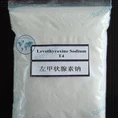


Tetracaine hydrochloride Basic Informaation
Product Name: Tetracaine hydrochloride
Synonyms: Tetracaine Hcl
CAS: 136-47-0
MF: C15H25ClN2O2
MW: 300.82
Product Categories: Local anesthetic
Tetracaine hydrochloride Chemical Properties
Melting point: 149°C
Density: 1.1279 (rough estimate)
refractive index: 1.5200 (estimate)
Storage temp.: 2-8°C
Solubility: alcohol: solublesoluble 40 parts of solvent
Appearance: White to Almost white Powder
Water Solubility: Soluble in water at 50mg/ml
Tetracaine is a local anaesthetic agent used to induce local analgesia in the eyes and skin during medical procedures.

Tetracaine hydrochloride description
Tetracaine hydrochloride is a local anesthetic drug and an ester derivative of p-amino benzoic acid. It acts by interfering with the entry of sodium ions into nerve cells and is one of the commonly used topical anesthetics. It is a highly effective local anesthetic that reversibly blocks nerve function. It is clinically used for infiltration anesthesia, nerve block anesthesia, epidural anesthesia, etc. Compared with procaine, its local anesthesia effect is remarkable. Tetracaine hydrochloride has been widely used in clinical practice.
Tetracaine hydrochloride Application
- Identify the mechanism of action of tetracaine.
- Summarize the indications for using tetracaine as an anesthetic agent.
- Review any potential adverse events associated with tetracaine.
- Explain the importance of improving care coordination among the interprofessional team to enhance the delivery of care for patients who can benefit from tetracaine anesthesia.
Tetracaine hydrochloride Dosage
Dosing for some common indications for the ophthalmic formulation (as the most common use) include the following:
- Corneal foreign body removal: 1 to 2 drops in the affected eye every 5 to 10 minutes for 1 to 3 doses. This regimen can also be used for suture removal.
- Brief ophthalmic anesthesia (tonometry or short corneal/conjunctival procedures): 1 to 2 drops in the eye(s) prior to starting the procedure.
- Prolonged ophthalmic anesthesia (e.g., cataract extraction or other extended procedures): 1 to 2 drops in the affected eye(s) every 5 to 10 minutes for 3 to 5 doses.
For local dermal anesthesia, tetracaine is also available in a topical cream combined with lidocaine. It is applied to intact skin from 20 to 60 minutes in advance of superficial dermal procedures.
Tetracaine hydrochloride Adverse reaction
The following serious ocular adverse reactions are described elsewhere in the labeling:
- Corneal injury with Intracameral Use
- Corneal Toxicity
- Corneal Injury due to Insensitivity
The following adverse reactions have been identified following use of Tetracaine Hydrochloride Ophthalmic Solution 0.5%. Because these reactions are reported voluntarily from a population of uncertain size, it is not always possible to reliably estimate their frequency or establish a causal relationship to drug exposure.
Ocular Adverse Reactions
Transient stinging, burning, and conjunctival redness, eye irritation, eye pain, ocular discomfort.
Frequently asked questions for Tetracaine hydrochloride
Hot Tags: tetracaine hydrochloride, China tetracaine hydrochloride manufacturers, suppliers, factory, Trenbolone Enanthate 200, Dimethocaine Hydrochloride, SR9009, Trenbolone Enanthate, Testolone, Enobosarm


